Investigating the Neurophysiological Basis of Schizophrenia

Author: Kayla Otoo
Editors: Joshua Payne, Elizabeth Li
Artist: Caitland So

A delusion from the truth. An odd hallucination. A monotone voice that lacks substance or emotion. These factors are all symptoms associated with schizophrenia. However, what is the basis of this chronic brain disorder affecting 1 percent of people worldwide?
For the past several years, geneticists have examined various factors to identify the sole contributor to the disorder. Multiple genes, such as dystrobrevin binding protein 1 (DTNBP1) and neuregulin 1 (NRG1), have been investigated as potential causes of the disease. However, there has been no single correlation between neurotransmitter changes and the pathophysiology of Schizophrenia.
However, geneticists and collaborators worldwide have recently collected data and specific samples in hopes of locating specific regions of the brain associated with an increased risk of Schizophrenia. Specifically, on chromosome 6, long associated with infectious disease, there seemed to be a strong correlation between an increased risk of Schizophrenia, thus sparking the belief that a possible contributor to the disease was an infectious agent. Still, however, more information was necessary to ascertain the responsible genes in the process and how specifically they acted.
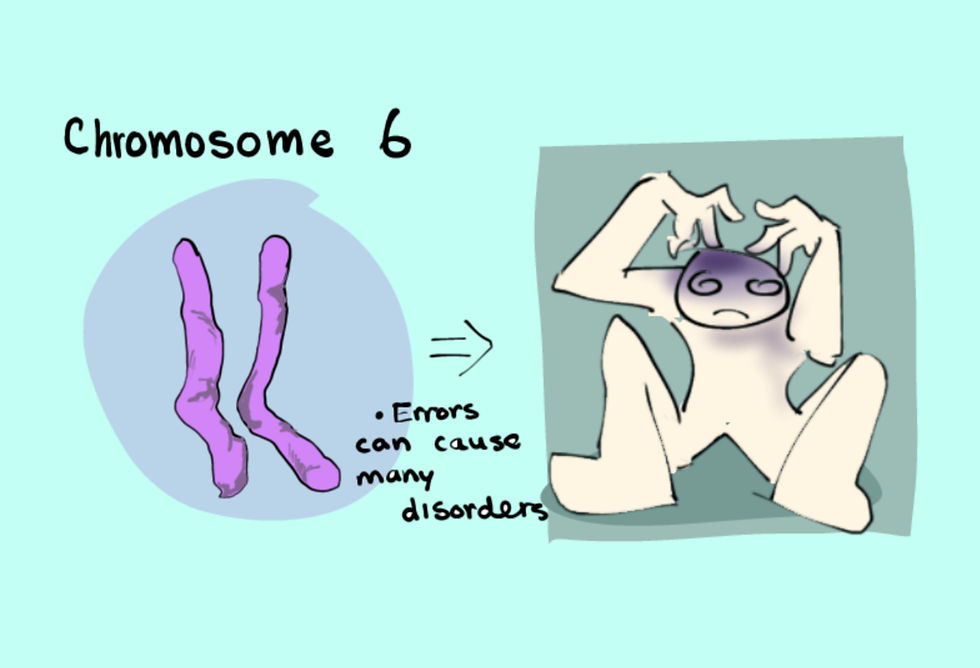
To decode this, Harvard Medical School (HMS) researchers at the Broad Institute’s Stanley Center for Psychiatric Research and Boston Children’s, Steven McCarroll, an associate professor and director of genetics, and Beth Stevens, an Institute Member at the Broad, looked at a specific C4 gene. The C4 gene plays a key role in the maturation of the brain by pruning synapses simply and reducing the connections between neurons. To provide further accuracy in their characterization of the gene, they developed a new molecular technique which found that the C4 gene structure could predict the activity of the C4 gene. In addition, over 700 post-mortem brain samples were taken. Consequently, looking at the bigger picture, the data scientists at HMS inferred that individuals with a structural form of the C4 gene had an increased chance of developing schizophrenia. Thus, could the C4 gene be the sole cause of developing the abnormality?

Currently, a huge chunk of medical therapies approaching Schizophrenia fall under the category of psychosis, the collection of symptoms when a person has trouble telling the difference between fiction and reality. However, this fails to address the root cause of the disorder. Therefore, if medical therapies target specific root causes to halt symptoms or cognitive decline, this disorder can be effectively treated. The advancement of treatments to address these findings is still years away; however, we now know more than ever the role that complement proteins play in the immune system, which provides us with an array of possible therapeutic approaches to address this issue.
Citations:
Goldsmith, Paul. “Biological Origin of Schizophrenia | Harvard Medical School.” Harvard.edu, 27
Luvsannyam, Enkhmaa, et al. “Neurobiology of Schizophrenia: A Comprehensive Review.” Cureus,
vol. 14, no. 4, 2022, pubmed.ncbi.nlm.nih.gov/35541299/, https://doi.org/10.7759/cureus.23959.
Mayo Clinic. “Schizophrenia .” Mayo Clinic, Mayo Clinic, 16 Oct. 2024,


Comments